
Keeper of the Page
Seller Rating: 4
Location: Enumclaw, WA
|
Very Good
|
Simon & Schuster Children's Publishing 1992 Slight wear to bright glossy cover, clean tight unmarked [...]
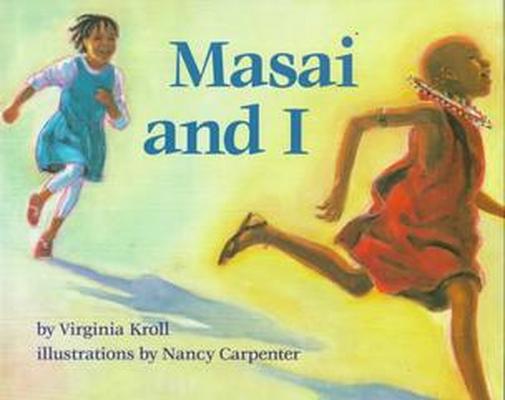
Simon & Schuster Children's Publishing 1992 Slight wear to bright glossy cover, clean tight unmarked illustrated text. From A young African American girl muses, "if I were a Masai, " and compares her own life with what she has learned in school about East Africa and its inhabitants. She considers where a Masai girl would sleep, how she occupies her time, what kinds of animals she would see. The artwork, realistic and warm, portrays a joyful girl who feels "the tingle of kin" with the Masai culture; her counterpart's spare environs, replete with exotic flora and fauna, are likewise strikingly depicted. The book's creative design--a Western scene on one page of each spread faces a typical Masai scene on the other--seamlessly blends corroborative colors and details: a yellow carpet becomes the dry savanna grass, the girl's bedsheet turns into a cowhide covering. (The final spread, however, may prove confusing: two characters are shown in Masai dress at an otherwise typical Western Thanksgiving dinner. ) Kroll's beguiling language--"whole flocks of flashing fireflies turned trees into lanterns"--offers resonant images; the last paragraph, in particular, rings proud and positive: "I come home and stare at my reflection in my bedroom mirror...smooth brown skin over high cheekbones and black eyes that slant up a little when I smile. I like what I see." Ages 4-7. 1992 From School Grade 2-4--An interesting, richly blended that connects two different worlds. A young African-American girl living in urban America feels a kin with the East African people, the Masai, whom she is studying in school. Linda ponders her life and makes comparisons to theirs, pointing out similarities and differences in how everyday tasks are accomplished. Initially, the connections made between the two distinct lifestyles are startling, but once readers become accustomed to the form of presentation, each full double-page spread becomes a pleasure in itself. One world flows naturally and artfully into the next. A single tree shares roots with a city street and the African grassland. Linda looks into her American mirror and sees her Masai counterpart. The oil and colored-pencil illustrations are reminiscent of Grifalconi's work both in subject and style. One can easily see that while the Masai live differently than Americans do, children are children no matter where they grow up. The information on the Masai may lead motivated children to do some research of their own. --Martha Topol, Northwestern Michigan College, Traverse City, MI 1992.
|
$4.28
|
|