
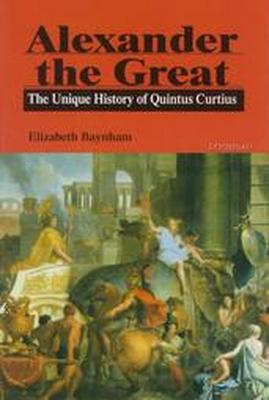
Alexander the Great the Unique History of Quintus Curtius
- List Price: $60.00
- Binding: Hardcover
- Publisher: Univ of Michigan Pr
- Publish date: 01/01/1999
In order to investigate what aspects of Alexander's person and reign interested ancient writers, and to understand what any ancient historian chose to preserve about Alexander, it is important to explore the historian's use of ancient sources and methods. Baynham's highly accessible work addresses all of these issues. She assumes that Curtius belonged to the first century C.E. -- a very important period for historiographical writing aside from interest in Alexander -- and her discussion explores his literary heritage, the influence of his predecessors, and the importance of his style.
Most notably, the volume explores the results of grouping Curtius and other historians of Alexander without considering their literary style and contemporary political concerns, and it also demonstrates that Curtius' work was a carefully planned narrative. Curtius was not only interested inpresenting Alexander as a savvy ruler and accomplished tactician, but also as a human subject to the whims of chance, of fortuna.
This volume is a solid contribution to studies of Alexander the Great as well as to Greek and Roman historiography. It will appeal to students of Alexander, but also to those with interests in Roman values and ancient literary composition.