
Due to planned maintenance, your school has disabled school system log-ins at this time.
You may continue shopping as a guest, or by creating a bookstore-only account.
Please complete the purchase of any items in your cart before going to this third-party site.
Also note that if you qualify for financial aid, items purchased through this site will not be subject to
reimbursement.
You are purchasing a license to access this digital product—not ownership of the content.
Access durations vary by product.
eBooks labeled "Lifetime" provide permanent online access along with the option to permanently download the content to a supported device.
Publishers may set shorter access periods and license durations for course materials accessed and hosted through their websites. Please confirm license duration and support directly with these publishers.
American Academy Holdings, Editora Manole, and Forum for International Trade Training have requested that we support "Lifetime" licenses with different durations. Please confirm license duration and support directly with these publishers.
All licenses are non-transferrable and may be revoked if VitalSource or its partners no longer hold rights to the content.
Learn more about our digital license terms on this support page.
Description:
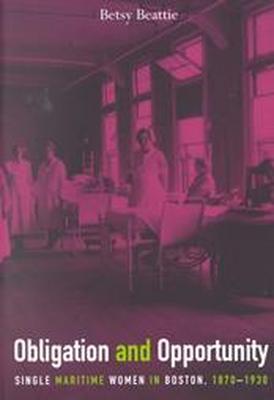
In the years between Confederation and the Depression nearly 500,000 Maritimers left their homes to work in the United States or other parts of Canada. Why they left and how their departure affected the region's economy have long been debated but, until now, a major component of that exodus has been largely ignored. In Obligation and Opportunity Betsy Beattie addresses this oversight, examining the lives of the tens of thousands of single Maritime women who left to work in Boston between 1870 and 1930.
Carefully crafted from oral interviews, diaries, letters, written recollections, census data, and other historical sources, Obligation and Opportunity opens a window into the world of the women who moved from the Maritimes to New England for work. Urged to stay through tales of danger and woe in the newspapers, they still left by the thousands, and in numbers larger than those for men. Beattie examines the rural families they left, the urban environment they entered in Boston, and the different occupations they filled. She sheds new light on the response of rural families to economic change and the effects of gender on choices for young women. She demonstrates that first-generation emigrants, who left out of a need to find work and send money back home, eased the way for second-generation emigrants, who left to seek opportunities in the big city.

Expand description
This seller ships with tracking when standard shipping is selected.
Please Wait
Notify Me When Available
Enter your email address below, and we'll contact you when your school
adds course materials for .
Enter your email address below, and we'll contact you
when is back in stock
(ISBN: ).