Due to planned maintenance, your school has disabled school system log-ins at this time.
You may continue shopping as a guest, or by creating a bookstore-only account.
Please complete the purchase of any items in your cart before going to this third-party site.
Also note that if you qualify for financial aid, items purchased through this site will not be subject to
reimbursement.
1st Printing. 8vo-over 7¾-9¾" tall. pp. 387. Minor edge and corner wear;
[...]
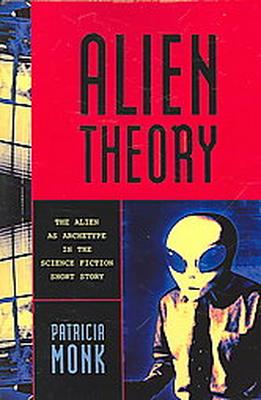
1st Printing. 8vo-over 7¾-9¾" tall. pp. 387. Minor edge and corner wear; lightly scuffed and scratched; spine is gently creased; some light shelf wear; ex-library with the usual library markings; overall a nice used copy! Color illustrated wrapper with black and white lettering. 387 historical and informative pages! "From the early days of pulp magazines to contemporary works of science fiction, the subject of the alien has been a fertile and enduring? if not also the most vital? element of the genre. In Alien Theory, author Patricia Monk asserts that the creation of the alien in short fiction contributes substantially to humanity's understanding of its present status and future potential in the universe. By employing a Jungian and archetypal approach to these stories, Monk attempts to direct the attention of readers to the significance of the vast body of imaginative fiction about the alien, arguing that studying the alien will reveal why this archetype is necessary in the development of humanity's understanding of its own intrinsic nature as a sapient being. When a science fiction writer writes about aliens, Monk asserts, he or she is saying something that can? and should? be taken seriously by readers. Furthermore, it is being expressed in a particular story-telling mode that deserves to be treated with respect. By discussing the creation of the form of the science-fictional alien, its psyche and the context in which aliens and humans interact, Monk brings into focus a topic that has not been given the rightful discussion it deserves. In addition to examining the alien in the science fiction short story, novella, and novelette, Monk evaluates its role in pre-postmodernist and postmodernist criticism and theory. The author also draws on relevant writings by editors, writers, and fans? including editorial letter columns and reviews? to place the stories in the context of science fiction. By drawing on all of these sources, Alien Theory brings into focus a topic that will be of interest not only to academics and students, but also to the general reader...."
1st Printing. 8vo-over 7¾-9¾" tall. pp. 387. Minor edge and corner wear;
[...]
1st Printing. 8vo-over 7¾-9¾" tall. pp. 387. Minor edge and corner wear; lightly scuffed and scratched; spine is gently creased; some light shelf wear; ex-library with the usual library markings; overall a nice used copy! Color illustrated wrapper with black and white lettering. 387 historical and informative pages! "From the early days of pulp magazines to contemporary works of science fiction, the subject of the alien has been a fertile and enduring? if not also the most vital? element of the genre. In Alien Theory, author Patricia Monk asserts that the creation of the alien in short fiction contributes substantially to humanity's understanding of its present status and future potential in the universe. By employing a Jungian and archetypal approach to these stories, Monk attempts to direct the attention of readers to the significance of the vast body of imaginative fiction about the alien, arguing that studying the alien will reveal why this archetype is necessary in the development of humanity's understanding of its own intrinsic nature as a sapient being. When a science fiction writer writes about aliens, Monk asserts, he or she is saying something that can? and should? be taken seriously by readers. Furthermore, it is being expressed in a particular story-telling mode that deserves to be treated with respect. By discussing the creation of the form of the science-fictional alien, its psyche and the context in which aliens and humans interact, Monk brings into focus a topic that has not been given the rightful discussion it deserves. In addition to examining the alien in the science fiction short story, novella, and novelette, Monk evaluates its role in pre-postmodernist and postmodernist criticism and theory. The author also draws on relevant writings by editors, writers, and fans? including editorial letter columns and reviews? to place the stories in the context of science fiction. By drawing on all of these sources, Alien Theory brings into focus a topic that will be of interest not only to academics and students, but also to the general reader...."
1st Printing. 8vo-over 7¾-9¾" tall. pp. 387. Minor edge and corner wear;
[...]
1st Printing. 8vo-over 7¾-9¾" tall. pp. 387. Minor edge and corner wear; lightly scuffed and scratched; spine is gently creased; some light shelf wear; ex-library with the usual library markings; overall a nice used copy! Color illustrated wrapper with black and white lettering. 387 historical and informative pages! "From the early days of pulp magazines to contemporary works of science fiction, the subject of the alien has been a fertile and enduring? if not also the most vital? element of the genre. In Alien Theory, author Patricia Monk asserts that the creation of the alien in short fiction contributes substantially to humanity's understanding of its present status and future potential in the universe. By employing a Jungian and archetypal approach to these stories, Monk attempts to direct the attention of readers to the significance of the vast body of imaginative fiction about the alien, arguing that studying the alien will reveal why this archetype is necessary in the development of humanity's understanding of its own intrinsic nature as a sapient being. When a science fiction writer writes about aliens, Monk asserts, he or she is saying something that can? and should? be taken seriously by readers. Furthermore, it is being expressed in a particular story-telling mode that deserves to be treated with respect. By discussing the creation of the form of the science-fictional alien, its psyche and the context in which aliens and humans interact, Monk brings into focus a topic that has not been given the rightful discussion it deserves. In addition to examining the alien in the science fiction short story, novella, and novelette, Monk evaluates its role in pre-postmodernist and postmodernist criticism and theory. The author also draws on relevant writings by editors, writers, and fans? including editorial letter columns and reviews? to place the stories in the context of science fiction. By drawing on all of these sources, Alien Theory brings into focus a topic that will be of interest not only to academics and students, but also to the general reader...."