Due to planned maintenance, your school has disabled school system log-ins at this time.
You may continue shopping as a guest, or by creating a bookstore-only account.
Please complete the purchase of any items in your cart before going to this third-party site.
Also note that if you qualify for financial aid, items purchased through this site will not be subject to
reimbursement.
Good condition. A copy that has been read but remains intact. May contain markings such as bookplates, stamps, limited notes and highlighting, or a few light stains.
Good condition. A copy that has been read but remains intact. May contain markings such as bookplates, stamps, limited notes and highlighting, or a few light stains.
Description:
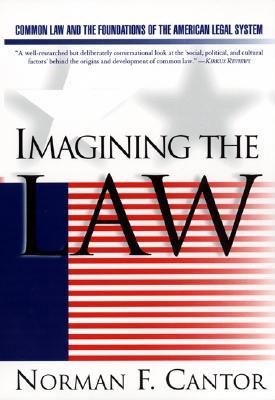
At a time when the role of the legal profession, the jury system and other key aspects of American law are under much dispute, "Imagining the Law" provides a historical perspective on these critical public issues. Historian Norman Cantor explains how and why common law developed out of Roman law, in response to the needs and assumptions of English society and culture from 1000 to 1780, and how it became the basis of the American legal system.
Professor Cantor shows that many of the current debates about the jury trial, the adversarial model and other parts of our legal system stem from this history. He highlights the minds and personalities of prominent judicial leaders, from Cicero and Justinian in the ancient world, through Glanville and Bracton in the Middle Ages, to Coke, Blackstone and Bentham in later centuries. A concluding chapter relates the social and cultural history of common law to the American system of Supreme Court Justices John Marshall and Oliver Wendell Holmes and to the legal profession in the United States today.
"Imagining the Law" is authoritatively based on the extensive amount of recent research and writing in the field of legal history, and on Professor Cantor's reading of thousands of court cases. It is the first book to examine legal history in a cultural and sociological context and thus illuminates one of our most important institutions in a whole new way.
Expand description
Product notice
Returnable at the third party seller's discretion and may come without consumable supplements like access codes, CD's, or workbooks.
Good condition. A copy that has been read but remains intact. May contain markings such as bookplates, stamps, limited notes and highlighting, or a few light stains.
Good condition. A copy that has been read but remains intact. May contain markings such as bookplates, stamps, limited notes and highlighting, or a few light stains.
Good condition. A copy that has been read but remains intact. May contain markings such as bookplates, stamps, limited notes and highlighting, or a few light stains.
Good condition. A copy that has been read but remains intact. May contain markings such as bookplates, stamps, limited notes and highlighting, or a few light stains.