
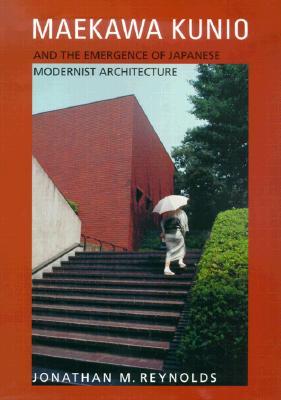
Maekawa Kunio and the Emergence of a Japanese Modernist Architecture
- Binding: Hardcover
- Publisher: Univ of California Pr
- Publish date: 07/01/2001
Maekawa studied architecture at the prestigious Tokyo Imperial University before moving to Paris in 1928 to work with Le Corbusier. The latter experience had a powerful impact on Maekawa; he became an advocate for Le Corbusier and modernism when he returned to Japan two years later. Throughout his career Maekawa designed residential, commercial, and government buildings in Japan and abroad. He became particularly well known internationally for his approach to public architecture, especially museums and public spaces such as the Tokyo Metropolitan Festival Hall. These projects illustrated the principles that earned Maekawa the respect and admiration of architects the world over.
Carefully researched, with numerous illustrations that complement discussions of Maekawa's principal projects, Reynolds's book will be welcomed in the fields of architecture and design. It will also attract readers interested in twentieth-century Japan, for in addition to highlightingMaekawa's architectural career, Reynolds portrays the broader cultural context within which Maekawa and other Japanese architects and artists sought to be heard and recognized.
| Seller | Condition | Comments | Price |
|
Salish Sea Books
|
Very Good

|
$253.07
|