
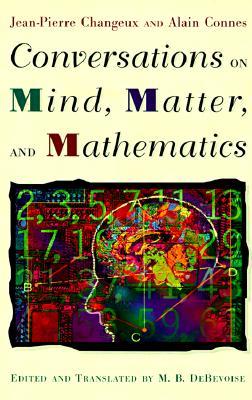
Conversations on Mind, Matter, and Mathematics
- List Price: $45.00
- Binding: Paperback
- Publisher: Princeton Univ Pr
- Publish date: 12/01/1998
The problematic status of mathematical objects leads Changeux and Connes to the organization and function of the brain, the ways in which its embryonic and post-natal development influences the unfolding of mathematical reasoning and other kinds of thinking, and whether human intelligence can be simulated, modeled, --or actually reproduced-- by mechanical means. The two men go on to pose ethical questions, inquiring into the natural foundations of morality and the possibility that it may have a neural basis underlying its social manifestations. This vivid record of profound disagreement and, at the same time, sincere search for mutual understanding, follows in the tradition of Poincare, Hadamard, and von Neumann in probing the limits of human experience and intellectual possibility.Why order should exist in the world at all, and why it should be comprehensible to human beings, is the question that lies at the heart of these remarkable dialogues.