Due to planned maintenance, your school has disabled school system log-ins at this time.
You may continue shopping as a guest, or by creating a bookstore-only account.
Please complete the purchase of any items in your cart before going to this third-party site.
Also note that if you qualify for financial aid, items purchased through this site will not be subject to
reimbursement.
You are purchasing a license to access this digital product—not ownership of the content.
Access durations vary by product.
eBooks labeled "Lifetime" provide permanent online access along with the option to permanently download the content to a supported device.
Publishers may set shorter access periods and license durations for course materials accessed and hosted through their websites. Please confirm license duration and support directly with these publishers.
American Academy Holdings, Editora Manole, and Forum for International Trade Training have requested that we support "Lifetime" licenses with different durations. Please confirm license duration and support directly with these publishers.
All licenses are non-transferrable and may be revoked if VitalSource or its partners no longer hold rights to the content.
Learn more about our digital license terms on this support page.
Description:
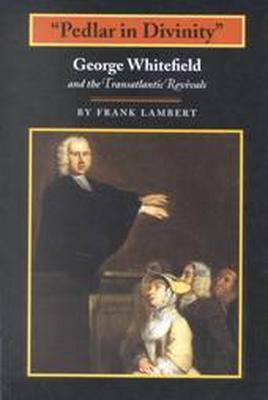
A pioneer in the commercialization of religion, George Whitefield (1714-1770) is seen by many as the most powerful leader of the Great Awakening in America: through his passionate ministry he united local religious revivals into a national movement before there was a nation. An itinerant British preacher who spent much of his adult life in the American colonies, Whitefield was an immensely popular speaker. Crossing national boundaries and ignoring ecclesiastical controls, he preached outdoors or in public houses and guild halls. In London, crowds of more than thirty thousand gathered to hear him, and his audiences exceeded twenty thousand in Philadelphia and Boston. In this fresh interpretation of Whitefield and his age, Frank Lambert focuses not so much on the evangelist's oratorical skills as on the marketing techniques that he borrowed from his contemporaries in the commercial world. What emerges is a fascinating account of the birth of consumer culture in the eighteenth century, especially the new advertising methods available to those selling goods and services--or salvation.
Whitefield faced a problem similar to that of the new Atlantic merchants: how to reach an ever-expanding audience of anonymous strangers, most of whom he would never see face-to-face. To contact this mass "congregation, " Whitefield exploited popular print, especially newspapers. In addition, he turned to a technique later imitated by other evangelists such as Dwight L. Moody, Billy Sunday, and Billy Graham: the deployment of advance publicity teams to advertise his coming presentations. Immersed in commerce themselves, Whitefield's auditors appropriated him as a well-publicized English import. He preachedagainst the excesses and luxuries of the spreading consumer society, but he drew heavily on the new commercialism to explain his mission to himself and to his transatlantic audience.
Expand description
This seller ships with tracking when standard shipping is selected.
Please Wait
Notify Me When Available
Enter your email address below, and we'll contact you when your school
adds course materials for .
Enter your email address below, and we'll contact you
when is back in stock
(ISBN: ).