
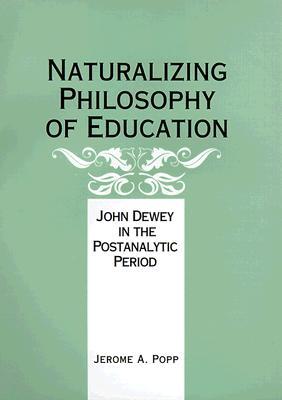
Naturalizing Philosophy of Education John Dewey in the Postanalytic Period
- List Price: $40.00
- Binding: Hardcover
- Publisher: Southern Illinois Univ Pr
- Publish date: 06/01/1998
Popp notes that empiricism, manifested in the philosophy of education as analytic philosophy, holds that scientific findings, especially from psychology, have no place in philosophy. But contemporary writers in the philosophy of science contend that to justify the methods of science we must consider what is known about intelligence and cognitive processes. These arguments are relevant to the ways in which we justify claims about proper education.
Naturalizing epistemology (using the results of science in philosophic theories) leads to an enhanced account of Dewey's instrumental approach to normative inquiry and strengthens attempts to justify educational practices. Dewey's critique of utopian approaches to social theory is bolstered by contemporary arguments in epistemology and the philosophy of science. These arguments reject the attempt by some in philosophy of education to solve value questions through an appeal to utopian thinking. Popp agrees with Dewey's view that the proper goals of education cannot be stated in these terms.
| Seller | Condition | Comments | Price |
|
Midtown Scholar Bookstore
|
Very Good |
$6.86
|
|
Inga's Original Choices
|
Like New

|
$10.12
|
|
Midtown Scholar Bookstore
|
Very Good |
$11.97
|
|
Powell's Books Chicago
|
New |
$14.62
|
|
Midtown Scholar Bookstore
|
Very Good |
$17.25
|
|
ErgodeBooks
|
Good |
$20.30
|
|
Murphy-Brookfield Books
|
Like New
|
$22.50
|
|
Bonita
|
Good
|
$39.56
|
|
ErgodeBooks
|
New |
$99.18
|
|
GridFreed
|
New |
$122.38
|