
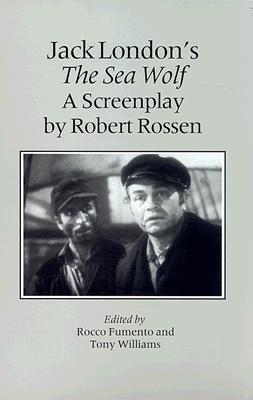
Jack London's the Sea Wolf a Screenplay
- List Price: $29.50
- Binding: Paperback
- Publisher: Southern Illinois Univ Pr
- Publish date: 08/01/1998
Both the novel and the film feature a hard-luck assemblage condemned either by savage coercion or pure evil fortune to sail aboard the Ghost, a seal-harvesting vessel commanded by a power-mad tyrant -- the aptly named Wolf Larsen. The film, however, necessarily differs from the novel. Discussing the process of turning literature into film, Fumento and Williams analyze in detail the differences between London's Sea Wolf and Rossen's screenplay.
One major change is the transformation of the barbarous Wolf Larsen from London's victimizer/victim of capitalistic society into Rossen's thinly disguised European dictator. And because of the star power of Garfield as well as popular taste that demanded a working-class hero, Rossen elevated minor character George Leach into a major player, demoting the aristocratic writer Humphrey Van Weyden to a lesser role. In one important respect, however, Rossen remained true to London: while shifting London's social indictment from amoral capitalism to the dictatorships of Europe, Rossen's script still condemns selfish and brutal individualism.
Re-creating the world into which the movie emerged, each editor provides a separate introduction. Fumento analyzes the role of Warner Brothers in determining relevant production and allegorical features of the final film version.Williams describes London's reasons for writing the original novel in 1903, its appeal for the cinema, the different film versions -- at least eight -- that have appeared, and the social and historical context influencing Rossen's screenplay.
| Seller | Condition | Comments | Price |
|
Midtown Scholar Bookstore
|
Very Good |
$6.86
|
|
Powell's Books Chicago
|
New |
$8.16
|
|
Bonita
|
Good

|
$33.60
|
|
Ira Joel Haber
|
Very Good |
$33.75
|
|
Robinson Street Books
|
Like New
|
$36.45
|
|
Just one more Chapter
|
New |
$59.92
|
|
Bonita
|
New
|
$61.75
|
|
GridFreed
|
New |
$89.87
|