
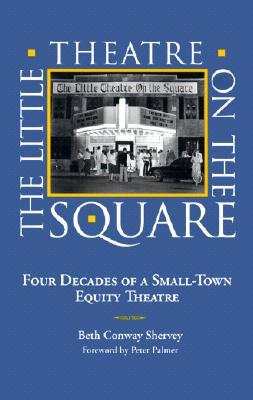
The Little Theatre on the Square Four Decades of a Small-Town Equity Theatre
- List Price: $27.50
- Binding: Paperback
- Publisher: Southern Illinois Univ Pr
- Publish date: 11/01/2000
Sullivan resembles most small towns in the Midwest, and The Little Theatre differs little from most professional summer stock theatres. Yet taken together, the small town and its theatre are clearly unusual, and the existence of the theatre obviously alters perceptions of life in the small town.
Before the theatre opened in 1957, Sullivan decidedly was a product of its time: the town sported a strong local chapter of the WCTU, moral people avoided taverns, liberals and Catholics were the minorities, and the population was predominantly white. While the theatre didn't effect instant change, it did introduce people to Sullivan who were obviously different.
Stars such as Betty Grable, Cesar Romero, Margaret Hamilton, and Pat O'Brien came into town. Aspiring actors and those behind the scenes also mingled with the residents of Sullivan. As a result, Shervey finds, Sullivan faced such issues as racism, homophobia, urban liberalism, and alcohol consumption at a much faster rate than similar towns. For some, the theatre disrupted a sense of the normal; for others, the theatre made life in Sullivan different and interesting, breakingthe restrictive bonds typically associated with small towns.