
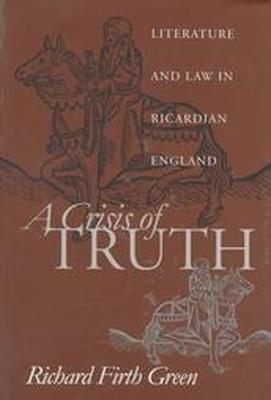
A Crisis of Truth: Literature and Law in Ricardian England
- Binding: Hardcover
- Publisher: University of Pennsylvania Press
- Publish date: 12/01/1998
Description:
In the late fourteenth century, the complex Middle English word trouthe, which had earlier meant something like "integrity" or "dependability", began to take on its modern sense of "conformity to fact". At the same time, the meaning of its antonym, tresoun, began to move from "personal betrayal" to "a crime against the state". In A Crisis of Truth. Richard Firth Green contends that these alterations in meaning were closely linked to a growing emphasis on the written over the spoken and to the simultaneous reshaping of legal thought and practice.
Expand description
According to Green, the rapid spread of vernacular literacy in the England of Richard II was driven in large part by the bureaucratic and legal demands of an increasingly authoritarian central government. The change brought with it a fundamental shift toward the attitudes we still hold about the nature of evidence and proof -- a move from a truth that resides almost exclusively in people to one that relies heavily on documents.
Product notice
Returnable at the third party seller's discretion and may come without consumable supplements like access codes, CD's, or workbooks.


Please Wait