
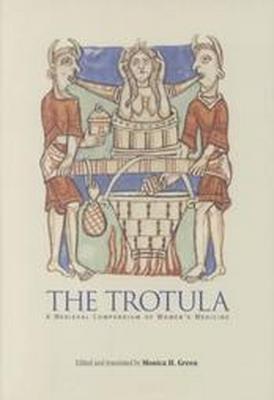
The Trotula: a Medieval Compendium of Women's Medicine
- List Price: $84.95
- Binding: Hardcover
- Publisher: University of Pennsylvania Press
- Publish date: 04/01/2001
Arguing that these texts can be understood only within the intellectual and social context that produced them, Green analyzes them against the background of historical gynecological literature as well as current knowledge about women's lives in twelfth-century southern Italy. She examines the history and composition of the three works and introduces the reader to the medical culture of medieval Salerno from which they emerged. Among her findings is that the second of the three texts, On the Treatments for Women, does derive from the work of a Salernitan woman healer named Trota. However, the other two texts -- On the Conditions of Women and On Women's Cosmetics -- are probably of male authorship, a fact indicating the complex gender relations surrounding the production and use of knowledge about the femalebody.
Through an exhaustive study of the extant manuscripts of the Trotula, Green presents a critical edition of the so-called standardized Trotula ensemble, a composite form of the texts that was produced in the mid-thirteenth century and circulated widely in learned circles. The facing-page complete English translation makes the work accessible to a broad audience of readers interested in medieval history, women's studies, and premodern systems of medical thought and practice.
| Seller | Condition | Comments | Price |
|
HPB-Diamond
|
Very Good

|
$44.98
|