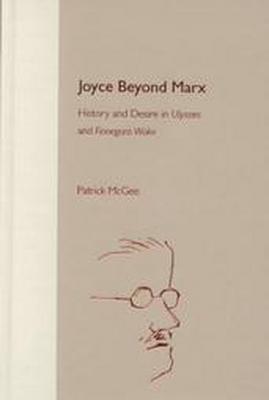
Joyce Beyond Marx History and Desire in Ulysses and Finnegans Wake
- List Price: $55.00
- Binding: Hardcover
- Publisher: Univ Pr of Florida
- Publish date: 03/01/2001
Offering a critique of the class politics of contemporary Joyce studies, McGee insists that Joyce's later work be understood in the context of the general political economy, or conditions of production, that underlies both Joyce's career and his critical reputation. He relates debates over pedagogy and the critical editions of Joyce's works to his situation as a colonial and postcolonial subject and as a critic of the social, economic, and ethical values of capitalism.
In his groundbreaking view of Joyce's politics, McGee offers a new way to understand Joyce's attitude toward violence and social change and his response to the Irish revolution and civil war. A final long essay lays out the implicit theory of social and cultural revolution in the Wake.
While especially valuable to scholars of modern literature and critical theory, the work also will be important to readers in a range of fields, including politics, education, psychoanalysis, feminist and gender theory, ethics, and postcolonial theory.