
Due to planned maintenance, your school has disabled school system log-ins at this time.
You may continue shopping as a guest, or by creating a bookstore-only account.
Please complete the purchase of any items in your cart before going to this third-party site.
Also note that if you qualify for financial aid, items purchased through this site will not be subject to
reimbursement.
You are purchasing a license to access this digital product—not ownership of the content.
Access durations vary by product.
eBooks labeled "Lifetime" provide permanent online access along with the option to permanently download the content to a supported device.
Publishers may set shorter access periods and license durations for course materials accessed and hosted through their websites. Please confirm license duration and support directly with these publishers.
American Academy Holdings, Editora Manole, and Forum for International Trade Training have requested that we support "Lifetime" licenses with different durations. Please confirm license duration and support directly with these publishers.
All licenses are non-transferrable and may be revoked if VitalSource or its partners no longer hold rights to the content.
Learn more about our digital license terms on this support page.
Description:
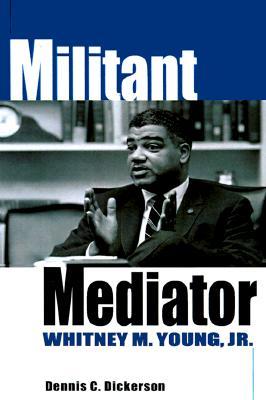
Alone among his civil rights colleagues -- Martin Luther King Jr., Roy Wilkins, James Farmer, John Lewis, and James Forman -- Whitney M. Young Jr. advocated integrationism embraced by both blacks and whites.
As a National Urban League Official in the Midwest and as a dean of social work at Atlanta University during the 1940s and 1950s, Young blended interracial mediation with direct protest. He demonstrated that these methods pursued together were the best tactics for the civil rights movement, then put them to work on a national scale upon becoming the executive director of the League in 1961.
In this position, Young forcefully alerted elite whites to the urgency of the black struggle for equality and urged them to spend federal, corporate, and foundation funds to lift residents in the nation's inner cities. Although he actively interacted with powerful whites, Young also drew support from middle- and working-class blacks who shared his belief in racial integration. As he navigated this middle ground Young came under fire from both black nationalists and white conservatives.
Expand description
Product notice
Returnable at the third party seller's discretion and may come without consumable supplements like access codes, CD's, or workbooks.