
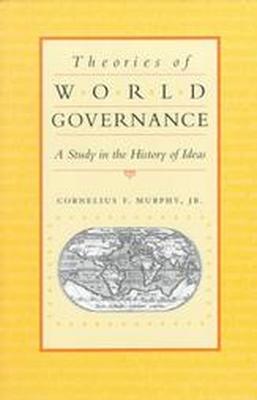
Theories of World Governance a Study in the History of Ideas
- List Price: $24.95
- Binding: Paperback
- Publisher: Catholic Univ of Amer Pr
- Publish date: 10/01/1999
Covering a wide range of disciplines -- from theology and philosophy to jurisprudence, ethics, and sociology -- Murphy explores how theorists have reflected upon the necessary components of an effective global order. At the outset, the thought of Christian Europe was shaped by a belief in a natural order established by the Creator of the universe. However, with the advent of the Enlightenment, the connections between the human and the transcendent were severed. There was a movement from a theocentric understanding of the powers of the human mind to an intellectual outlook that blurred the distinctions between the divine and human. This study in the history of ideas examines the profound effects of the fundamental shift from transcendence to immanence upon the development of international theory. Murphy discusses the thought of Leibniz, Wolff, Kant, Hegel, and Phillip Allott, among others.
The study concludes with an extended reflection on the importanceof a sound political philosophy to the future well-being of the global community. Possible improvements in the existing arrangements, such as reform of the United Nations, are discussed. Murphy suggests that in order for a society of sovereign states to be transformed into a world political community, human rights and self-governance within states must first be strengthened and, at the same time, individuals of all states must begin to realize their responsibilities toward the whole human family.
| Seller | Condition | Comments | Price |
|
HPB-Red
|
Good

|
$11.31
|