
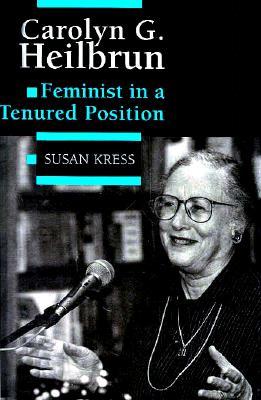
Carolyn G. Hielbrun Feminist in a Tenured Postion
- Binding: Hardcover
- Publisher: Univ of Virginia Pr
- Publish date: 10/01/1997
Incorporating interviews with friends, colleagues, and Heilbrun herself, Kress illuminates her subject's various public identities: as Wellesley undergraduate, as graduate student and teacher at Columbia, as president of the Modern Language Association, as scholar, as polemicist, and as mystery writer. Charting the evolution of Heilbrun's thought, the author explores the literary influence of Virginia Woolf and Dorothy Sayers, describes her struggles with Lionel Trilling's views, analyzes the interplay between Heilbrun's fictional and critical texts, and places her in the context of the developing women's movement, invoking Betty Friedan and Adrienne Rich as figures in counterpoint.
Heilbrun's experience echoes that of a generation of professional women, often isolated and marginalized within inhospitable institutions. The particulars of her history reveal a woman conflicted about her Jewish heritage and her class, and rebelling against conventional definitions of womanhood. With moderation at first, but then with greater daring in middle age, Heilbrun pursued her grand subject: a model of selfhood that would expand opportunities for female action and aspiration. Her detective fiction, with its possibilities for inventing other selves, offered strategies to cope with anger and surviveconflict.
Kress weighs the risks of the life Heilbrun staked out for herself and evaluates her contributions to the ongoing feminist conversation. This important story of one feminist's public career also brings into focus the major debates and transformations of the contemporary women's movement.
"It seems highly appropriate that the author of Rein venting Womanhood and Writing a Woman's Life -- cogent speculations on the problematic relationship between women and identity -- should herself be the subject of a biographical study, and the story of Heilbrun's public life is a compelling one. Susan Kress has done a thorough and impressive job of research, and her book is written in a lively, clear, nuanced style that will be accessible to all audiences". -- Nancy A. Walker, Vanderbilt University