Due to planned maintenance, your school has disabled school system log-ins at this time.
You may continue shopping as a guest, or by creating a bookstore-only account.
Please complete the purchase of any items in your cart before going to this third-party site.
Also note that if you qualify for financial aid, items purchased through this site will not be subject to
reimbursement.
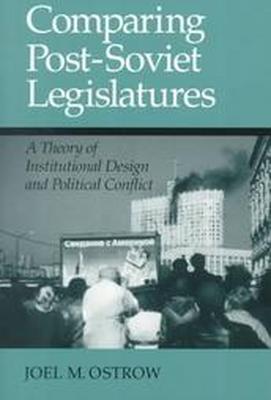
Comparing Post-Soviet Legislatures a Theory of Institutional Design and Political Conflict
by Joel M. Ostrow
ISBN: 9780814250440
ISBN10: 0814250440
Comparing Post-Soviet Legislatures a Theory of Institutional Design and Political Conflict
by Joel M. Ostrow
List Price:$32.95
Binding:Paperback
Publisher:Ohio State Univ Pr
Publish date:06/01/2000
ISBN:9780814250440
ISBN10:0814250440
Currently Unavailable
Description:
One dilemma facing new or newly independent states, such as those of the former Soviet Union, is how to design effective legislatures when political parties are weak and fragmented or even nonexistent. In this book, Joel M. Ostrow develops a comparative institutional framework to explain marked differences in behavior across three post-Soviet legislatures: the Russian Supreme Soviet, the Russian State Duma, and the Estonian legislature. He argues that these differences in ability to manage political conflict can be explained in large measure by the design of the legislatures. Most significant is the choice of whether and how to include parties or partisan factors.
Legislatures are an omnipresent component of modern democracy. Ostrow's comparative institutional design confirms the presumption of many political scientists that parties are essential for legislative consensus building. However it also reveals that parties may have paradoxical effects on a legislature's performance. In following the budget process in Russia and Estonia, Ostrow explores the consequences that different institutional designs have had on post-Soviet legislatures. He has found that how parties are included may determine how capable a legislature is at managing political conflict, both internally and with the executive branch of the government. The author was present at many of the committee hearings and legislative sessions he describes, and his firsthand observations and interviews with committee members enhance his analysis.

Expand description
This seller ships with tracking when standard shipping is selected.
Please Wait
Notify Me When Available
Enter your email address below, and we'll contact you when your school
adds course materials for .
Enter your email address below, and we'll contact you
when is back in stock
(ISBN: ).