Due to planned maintenance, your school has disabled school system log-ins at this time.
You may continue shopping as a guest, or by creating a bookstore-only account.
Please complete the purchase of any items in your cart before going to this third-party site.
Also note that if you qualify for financial aid, items purchased through this site will not be subject to
reimbursement.
You are purchasing a license to access this digital product—not ownership of the content.
Access durations vary by product.
eBooks labeled "Lifetime" provide permanent online access along with the option to permanently download the content to a supported device.
Publishers may set shorter access periods and license durations for course materials accessed and hosted through their websites. Please confirm license duration and support directly with these publishers.
American Academy Holdings, Editora Manole, and Forum for International Trade Training have requested that we support "Lifetime" licenses with different durations. Please confirm license duration and support directly with these publishers.
All licenses are non-transferrable and may be revoked if VitalSource or its partners no longer hold rights to the content.
Learn more about our digital license terms on this support page.
Description:
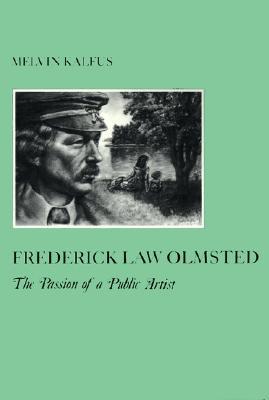
Frederick Law Olmsted's career as a landscape architect was long and varied. The best-known fruits of that career were surely the great urban parks: Central Park in Manhattan, Prospect Park in Brooklyn, Franklin Park in Boston. But most of this took place after the Civil War. Prior to 1865, Olmsted had built a public reputation as an author and journalist (producing three historically important books on slavery and the antebellum South) and as General Secretary of the Sanitary Commission of the Union Forces, the committee in charge of organizing medical treatment for the military during the war. He had also previously been an apprentice merchant, a seaman, a farmer, and manager of a mining plantation in California. His life had been marked by innumerable illnesses and accidents. His personality was notable for its contentiousness and obsessiveness.
Working from Olmsted's own personal and professional writings, Melvin Kalfus seeks to establish in this, the first biography of Olmstead to appear in a decade and a half, the connections between the many facets of Olmstead's life and work. Kalfus shows how Olmsted's childhood afflictions provided him with the inner sources of his creative imagination, provided the symbolism that was the linguistic and visual vocabulary employed in his work, fired his ambition, and led him so obsessively to seek the world's esteem through his works. Finally, Kalfus argues that Olmsted's individual psychodynamics fitted him uniquely to the role of the creative professional in public life-- the agent (or "delegate") for his society's needs-- needs that were unspoken as well as spoken.
Expand description
Product notice
Returnable at the third party seller's discretion and may come without consumable supplements like access codes, CD's, or workbooks.