
Due to planned maintenance, your school has disabled school system log-ins at this time.
You may continue shopping as a guest, or by creating a bookstore-only account.
Please complete the purchase of any items in your cart before going to this third-party site.
Also note that if you qualify for financial aid, items purchased through this site will not be subject to
reimbursement.
You are licensing a digital product for a set duration.
Durations are set forth in the product description, with "Lifetime" typically meaning five (5) years of online access and permanent download to a supported device.
All licenses are non-transferrable.
More details can be found here. May come without consumable supplements like access codes, CD's, or workbooks.
Description:
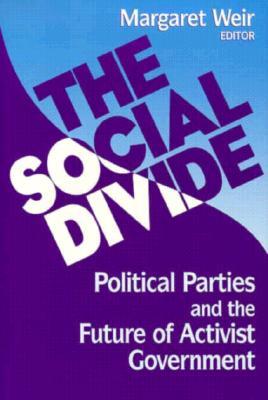
The extraordinary swings in the scope and content of the policy agenda during the first Clinton administration revealed a fundamental partisan divide over the social role of the federal government. This book argues that the recent conflicts over social policy represent key elements in strategies that parties designed in an attempt to consolidate their hold over the federal government. Long frustrated by divided government, each party exceeded its electoral mandate in hopes of enacting major policy reforms aimed to shift politics in their direction for the foreseeable future.
The book traces the overreaching and limited legislative success of the first Clinton administration's approach to three features of politics and policymaking: the polarization of political elites; the predominance of advertising campaigns and intense interest group politics as parties have ceased to mobilize ordinary people; and the unprecedented role that budgetary concerns now play in social policymaking. Although neither party managed to enact its major transforming agenda, Congress did pass new policies -- most notably welfare reform -- that together with a host of other changes in the states and the private sector altered the landscape for social policy. The poor have been the biggest losers as Democrats and Republicans have fought to win the middle class over to their vision of the future.
The authors analyze the institutions and tools of policymaking, the political use of public opinion polling, and the politics of the deficit. They then consider policies designed to win over the middle class, including health care policy, employer-provided social benefits, and crime policy. Last, they address policies targeted at the disadvantaged, including welfare and affirmative action.

Expand description
Product notice
Returnable at the third party seller's discretion and may come without consumable supplements like access codes, CD's, or workbooks.
Good condition. A copy that has been read but remains intact. May contain
[...]
Good condition. A copy that has been read but remains intact. May contain markings such as bookplates, stamps, limited notes and highlighting, or a few light stains. Bundled media such as CDs, DVDs, floppy disks or access codes may not be included.
Good condition. A copy that has been read but remains intact. May contain
[...]
Good condition. A copy that has been read but remains intact. May contain markings such as bookplates, stamps, limited notes and highlighting, or a few light stains. Bundled media such as CDs, DVDs, floppy disks or access codes may not be included.