
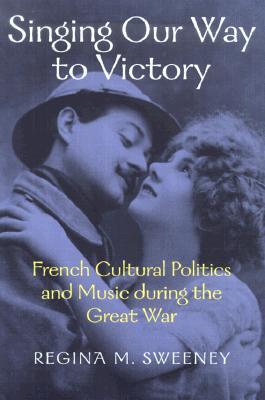
Singing Our Way to Victory French Cultural Politics and Music During the Great War
- Binding: Paperback
- Publisher: Univ Pr of New England
- Publish date: 03/01/2001
In early twentieth century Europe, singing was considered a part of education integral to the formation of good citizens. Singing was especially important to the French, for whom it was historically associated with authenticity of feeling and purity of character, and thereby with the very roots of French democracy; it was particularly associated with the image of France as a victorious nation. But as Sweeney shows, different performances of the same patriotic song could carry vastly different meanings. By focusing on singing, Sweeney is able to provide a more nuanced reading of French Great War cultures than ever before, and to show that cultures previously held to be exclusive -- those of the home front and the Western front, for example -- existed in dialectical tension and were them selves far from homogenous.
| Seller | Condition | Comments | Price |
|
BooksRun
|
Good

|
$8.30
|
|
ErgodeBooks
|
Good |
$20.82
|
|
Bonita
|
Good
|
$37.08
|
|
Just one more Chapter
|
New |
$62.16
|
|
Bonita
|
New
|
$63.51
|
|
GridFreed
|
New |
$84.85
|