Due to planned maintenance, your school has disabled school system log-ins at this time.
You may continue shopping as a guest, or by creating a bookstore-only account.
Please complete the purchase of any items in your cart before going to this third-party site.
Also note that if you qualify for financial aid, items purchased through this site will not be subject to
reimbursement.
The book is in good condition with all pages and cover intact including the
[...]
The book is in good condition with all pages and cover intact including the dust jacket if originally issued. The spine may show light wear. Pages may contain some notes or highlighting and there might be a From the library of label. Boxed set packaging shrink wrap or included media like CDs may be missing.
Description:
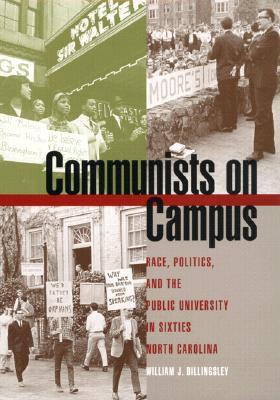
North Carolina's 1963 speaker ban law declared the state's public college and university campuses off-limits to "known members of the Communist Party" or to anyone who cited the Fifth Amendment in refusing to answer questions posed by any state or federal body. Oddly enough, the law was passed in a state where there had been no known communist activity since the 1950s. Just which "communists" was it attempting to curb? In Communists on Campus, William J. Billingsley bares the truth behind the false image of the speaker ban's ostensible concern. Appearing at a critical moment in North Carolina and U.S. history, the law marked a last-ditch effort by conservative rural politicians to increase their power and quell the demands of the civil rights movement, preventing the feared urban political authority that would accompany desegregation and African American political participation. Questioning the law's discord with North Carolina's progressive reputation, Billingsley also criticizes the school officials who publicly appeared to oppose the speaker ban law but, in reality, questioned both students' rights to political opinions and civil rights legislation. Exposing the University of North Carolina at Chapel Hill as the main target of the ban, he addresses the law's intent to intimidate state schools into submission to reactionary legislative demands at the expense of the students' political freedom.
Contrary to its aims, the speaker ban law spawned a small but powerfully organized student resistance led by the Students for a Democratic Society at the University of North Carolina. The SDS, quickly joined by more traditional student groups, mobilized student "radicals" in a memorable effortto halt this breach of their constitutional rights. Highlighting the crisis point of the civil rights movement in North Carolina, Communists in Carolina exposes the activities and machinations of prominent political and educational figures Allard Lowenstein, Terry Sanford, William Friday, Herbert Aptheker, and Jesse Helms, in an account that epitomizes the social and political upheaval of sixties America.
Expand description
Product notice
Returnable at the third party seller's discretion and may come without consumable supplements like access codes, CD's, or workbooks.
The book is in good condition with all pages and cover intact including the
[...]
The book is in good condition with all pages and cover intact including the dust jacket if originally issued. The spine may show light wear. Pages may contain some notes or highlighting and there might be a From the library of label. Boxed set packaging shrink wrap or included media like CDs may be missing.
The book is in good condition with all pages and cover intact including the
[...]
The book is in good condition with all pages and cover intact including the dust jacket if originally issued. The spine may show light wear. Pages may contain some notes or highlighting and there might be a From the library of label. Boxed set packaging shrink wrap or included media like CDs may be missing.