
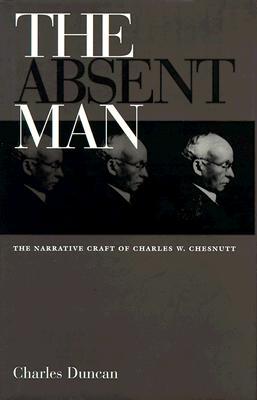
The Absent Man the Narrative Craft of Charles W. Chesnutt
- Binding: Hardcover
- Publisher: Ohio Univ Pr
- Publish date: 12/01/1998
Following the highly autobiographical nonfiction produced by Frederick Douglass, Harriet Jacobs, and other slave narrative writers, Chesnutt's complex, multi-layered short fiction transformed the relationship between African-American writers and their readers. But despite generous praise from W. D. Howells and other important critics of his day, and from such prominent readers as William L. Andrews, Henry Louis Gates, Jr., and Eric Sundquist in ours, Chesnutt occupies a curiously ambiguous place in American literary history.
In The Absent Man, Charles Duncan demonstrates that Chesnutt's uneasy position in the American literary tradition can be traced to his remarkable narrative subtlety. Profoundly aware of the delicacy of his situation as a black intellectual at the turn of the century, Chesnutt infused his work with an intricate, enigmatic artistic vision that defies monolithic or unambiguously political interpretation, especially with regard to issues of race and identity that preoccupied him throughout his career.
| Seller | Condition | Comments | Price |
|
Midtown Scholar Bookstore
|
Good |
$9.51
|
|
HPB Inc.
|
Very Good

|
$11.23
|
|
Priceless Books
|
Very Good
|
$13.50
|
|
ErgodeBooks
|
Good |
$25.70
|
|
Bonita
|
Good
|
$47.16
|
|
indoo.com
|
New |
$50.46
|
|
paragonbooks
|
New |
$70.80
|
|
Just one more Chapter
|
New |
$73.88
|
|
GridFreed
|
New |
$115.58
|
|
Bonita
|
New
|
$138.67
|