
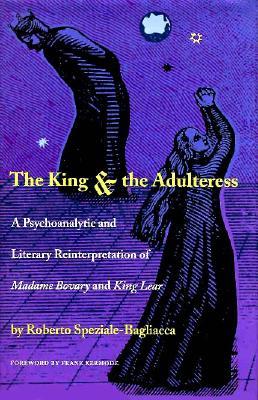
The King & the Adulteress a Psychoanalytical and Literary Reinterpretation of Madame Bovary and King Lear
- List Price: $64.95
- Binding: Hardcover
- Publisher: Duke Univ Pr
- Publish date: 04/01/1998
Approaching the characters in Bovary and Lear from both an analytic and a critical viewpoint, Speziale-Bagliacca reinterprets many issues and events that involve archetypal figures of modern literary mythology. In fact, he reverses much of the received opinion about them. Charles Bovary, for example, far from being a victim of his wife's neurotic restlessness or the epitome of a passive imbecile, is a masochist of the highest order who makes a decisive contribution to Emma's miserable end. Lear, rather than a tragedy involving the sweet Cordelia, noble Kent, and the Fool as good and loyal supporters of an old king driven to madness by his overbearing evil daughters, is precisely the opposite. The sympathetic understanding of the reader should go, Speziale-Bagliacca suggests, also to Regan, Goneril, and Edmund, while the king, whose crisis is viewed in the light of psychoanalytic findings on depression, finally becomes the true unbeloved "bastard" of the play.
Infused with a love of literature, The King and the Adulteress will engage scholars and critics in various areas of literary study and psychoanalytic theory.