
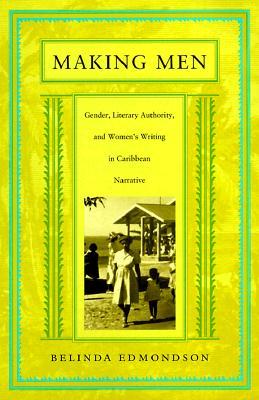
Making Men Gender, Literary Authority, and Women's Writing in Caribbean Narrative
- List Price: $31.95
- Binding: Paperback
- Publisher: Duke Univ Pr
- Publish date: 02/01/1999
Discussing the canonical Caribbean narrative as it reflects national identity under the domination of English cultural authority, Belinda Edmondson focuses particularly on the pervasive influence of Victorian sensibilities in the structuring of twentieth-century national identity. She shows that issues of race and English constructions of masculinity not only are central to West Indian identity but also connect Caribbean authorship to the English literary tradition. This perspective on the origins of West Indian literary nationalism then informs Edmondson's search for female subjectivity in current literature by West Indian women immigrants in America. Making Men compares the intellectual exile of men with the economic migration of women, linking the canonical male tradition to the writing of modern West Indian women and exploring how the latter write within and against the historical male paradigm in the continuing process of national definition.
With theoretical claims that invite newdiscourse on English, Caribbean, and American ideas of exile, migration, race, gender identity, and literary authority, Making Men will be informative reading for those involved with postcolonial theory, African American and women's studies, and Caribbean literature. This study of colonialism and art examines the intersection of visual culture and political power in late-eighteenth-century British painting. Focusing on paintings from British America, the West Indies, and India, Beth Fowkes Tobin investigates the role of art in creating and maintaining imperial ideologies and practices -- as well as in resisting and complicating them.
Informed by the varied perspectives of postcolonial theory, Tobin explores through close readings of colonial artwork the dynamic middle ground in which cultures meet. Linking specific colonial sites with larger patterns of imperial practice and policy, she examines paintings by William Hogarth, Benjamin West, Gilbert Stuart, Arthur William Devis, and Agostino Brunias, among others. These works include portraits of colonial officials, conversation pieces of British families and their servants, portraits of Native Americans and Anglo-Indians, and botanical illustrations produced by Calcutta artists for officials of the British Botanic Gardens. In addition to examining the strategies that colonizers employed to dominate and define their subjects, Tobin uncovers the tactics of negotiation, accommodation, and resistance that make up the colonized's response to imperial authority. By focusing on the paintings' cultural and political engagement with imperialism, she accounts for their ideological power and visual effect while arguing for their significance asagents in the colonial project.
| Seller | Condition | Comments | Price |
|
PlumCircle
|
New |
$2.21
|
|
Powell's Books Chicago
|
Very Good |
$7.87
|
|
Books From California
|
Good |
$10.22
|
|
Daedalus Books
|
Very Good

|
$18.51
|
|
ErgodeBooks
|
Good |
$25.12
|
|
Bonita
|
Good
|
$25.72
|