
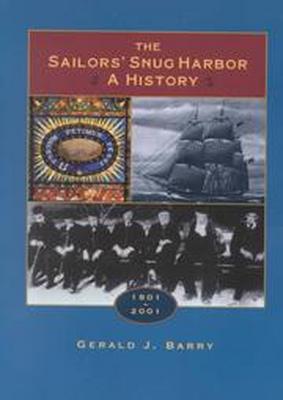
The Sailors' Snug Harbor a History 1801-2001
- Binding: Paperback
- Edition: 1
- Publisher: Fordham Univ Pr
- Publish date: 10/01/2000
Year-by-year buildings were added until there were 55 major structures. The Harbor produced its own electricity and steam, grew its own food, and had its own water supply, a church, cemetery, hospital, theater, library. At the start of the twentieth century, more than 1,000 old sailors were in residence.
Beginning in 1950, as part of a 'modernization and improvement plan, ' two dozen buildings on the Staten Island property were bulldozed. Next on the destruction list were the Sailors' Snug Harbor dormitories which would replaced by a 120-bed modern infirmary insisted upon by the State Department of Health . At this point, the city's new Landmarks Preservation Commission stepped in. On October 14, 1965, at its first designation hearing, the Commission landmarked and saved the old dormitories.
Property for a new institution for the old sailors was found in Sea Level, North Carolina, down the road from a hospital just taken over by the Duke University Medical Center. Citing the proximity of Duke's hospital to the new Harbor site, New York's surrogate court approved relocation.
Mayor John Lindsay, in June 1973, announced a plan to turn the Sailors' SnugHarbor buildings into a national showplace of culture and education. Over the years, the Sailors' Snug Harbor has housed various cultural institutions, including the Newhouse Center for Contemporary Arts, the Staten Island Botanical Garden, and the Staten Island Children's Museum. Today, Snug Harbor is the most important cultural asset on Staten Island, and one of the fastest-growing arts centers in the city.