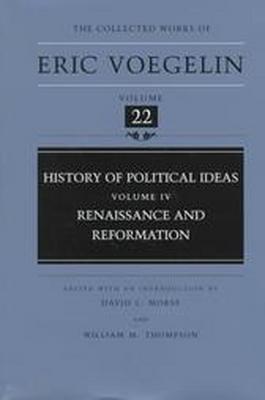
History of Political Ideas Renaissance and Reformation (volume4)
- Binding: Hardcover
- Publisher: Univ of Missouri Pr
- Publish date: 07/01/1998
Voegelin identifies not one but two distinct beginnings of the movement toward modern political consciousness: the Renaissance and the Reformation. This volume carefully considers both periods and their presence in modern thought.
Represented by the works of Niccolo Machiavelli, Desiderius Erasmus, and Thomas More, the Renaissance is characterized by Voegelin as a struggle for balance. Exploring the transition from Renaissance to Reformation is a brilliant chapter, "The People of God", which examines the sectarian movement. These pages contain the rich historical background that led to Voegelin's later conclusions about Gnosticism and its modern influences.
Voegelin maintains a dim view of the political philosophy of the Reformation, saying, "(W) e cannot connect it with the name of a single great political thinker". Yet he sheds light on the strengths and inadequacies of its key figures, Martin Luther and John Calvin.
By analyzing the political ideas that first emerged during the Renaissance and Reformation, this fascinating volume provides a foundation for understanding the events of centuries to follow.
| Seller | Condition | Comments | Price |
|
HPB-Red
|
Good

|
$58.61
|