
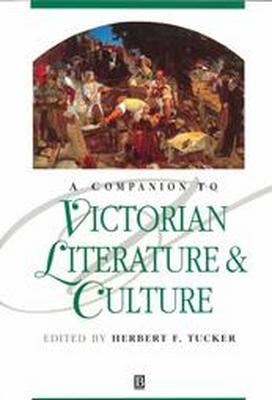
A Companion to Victorian Literature and Culture
- Binding: Paperback
- Publisher: John Wiley & Sons
- Publish date: 10/01/1999
Four initial chapters of historical overview focus on climactic years (1832, 1848, 1870, 1897) in which accumulated forces for change precipitated new Victorian directions. Four chapters from Part II examine in childhood, adolescence, aging, and death the chief phases of an individual life and their literary representations, while a fifth considers how pervasively Victorian lives were influenced by sexuality.
Part III expands the midmost life phase, working adulthood, to survey prominent Victorian careers, with chapters on religion, medicine, education, law, bureaucracy, the military, banking, industry, commerce, spectacle and publishing. While each chapter of the Companion highlights literary aspects of its topic, literature as such takes center stage in Part IV, which includes separate chapters on the genres of poetry, fiction, sage writing, life writing, drama, and literary criticism. The book concludes with three essays that investigate the Victorians' conception of their world as defined by the maintenance and transgression of borders: between body and environment, home and street, nation and globe.
This integrated design lets the Companion combine inclusiveness with convenience. Its topical spectrum, precision of focus, and accessible style keep the book available for ready consultation, while an index and network of cross-references encourage further study. When read sequentially, the chapters render a textured and polyphonic image of the Victorian imagination: a manifold cultural force thatnotoriously eludes neat summary, yet bequeaths to our own day a recognizable tradition with which we are destined to struggle for some time to come.