
Due to planned maintenance, your school has disabled school system log-ins at this time.
You may continue shopping as a guest, or by creating a bookstore-only account.
Please complete the purchase of any items in your cart before going to this third-party site.
Also note that if you qualify for financial aid, items purchased through this site will not be subject to
reimbursement.
You are purchasing a license to access this digital product—not ownership of the content.
Access durations vary by product.
eBooks labeled "Lifetime" provide permanent online access along with the option to permanently download the content to a supported device.
Publishers may set shorter access periods and license durations for course materials accessed and hosted through their websites. Please confirm license duration and support directly with these publishers.
American Academy Holdings, Editora Manole, and Forum for International Trade Training have requested that we support "Lifetime" licenses with different durations. Please confirm license duration and support directly with these publishers.
All licenses are non-transferrable and may be revoked if VitalSource or its partners no longer hold rights to the content.
Learn more about our digital license terms on this support page.
Description:
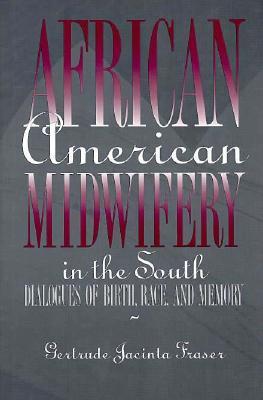
Starting at the turn of the century, most African American midwives in the South were gradually excluded from reproductive health care. Gertrude Fraser shows how physicians, public health personnel, and state legislators mounted a campaign ostensibly to improve maternal and infant health, especially in rural areas. They brought traditional midwives under the control of a supervisory body, and eventually eliminated them. In the writings and programs produced by these physicians and public health officials, Fraser finds a universe of ideas about race, gender, the relationship of medicine to society, and the status of the South in the national political and social economies.
Fraser also studies this experience through dialogues of memory. She interviews members of a rural Virginia African American community that included not just retired midwives and their descendants, but anyone who lived through this transformation in medical care -- especially the women who gave birth at home attended by a midwife. She compares these narrations to those in contemporary medical journals and public health materials, discovering contradictions and ambivalence: was the midwife a figure of shame or pride? How did one distance oneself from what was now considered "superstitious" or "backward" and at the same time acknowledge and show pride in the former unquestioned authority of these beliefs and practices?
In an important contribution to African American studies and anthropology, African American Midwifery in the South brings new voices to the discourse on the hidden world of midwives and birthing.

Expand description
This seller ships with tracking when standard shipping is selected.
Please Wait
Notify Me When Available
Enter your email address below, and we'll contact you when your school
adds course materials for .
Enter your email address below, and we'll contact you
when is back in stock
(ISBN: ).