Due to planned maintenance, your school has disabled school system log-ins at this time.
You may continue shopping as a guest, or by creating a bookstore-only account.
Please complete the purchase of any items in your cart before going to this third-party site.
Also note that if you qualify for financial aid, items purchased through this site will not be subject to
reimbursement.
Description:
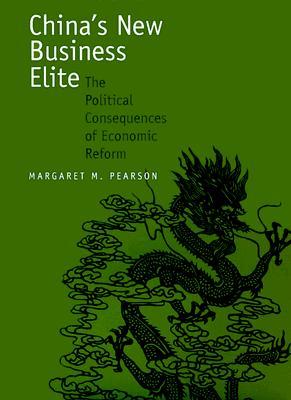
The transition from a planned to a market economy that began in China in the late 1970s unleashed an extraordinary series of changes: private enterprises have sprouted, foreign investment has soared, the standard of living has improved, and corruption has increased. Another result of economic reform has been the creation of a new class -- China's new business elite. In this vigorous and thorough analysis, Margaret M. Pearson considers the impact that this new class is having on China's politics, and particularly the extent to which that impact is favorable to democratization.
Members of China's emerging business elite have benefited tremendously from the new economic freedoms in China, but have they pushed for political reforms as well? To explore this question, Margaret Pearson conducted extensive interviews with Chinese-born managers of foreign-sector firms and researched the activities of domestic-sector entrepreneurs. She concludes that, contrary to the assumptions of Westerners, these groups are not at the forefront of democratization or the emergence of a civil society. Rather, she argues, they are at the head of a new form of state-society relations in China, a hybrid of socialist corporatism and clientelism. Ultimately, she demonstrates that this hybrid pattern, which has deep roots in Chinese history, has been shaped deliberately by the Chinese state to ensure that economic development will not lead to democratization.
Expand description
Product notice
Returnable at the third party seller's discretion and may come without consumable supplements like access codes, CD's, or workbooks.