
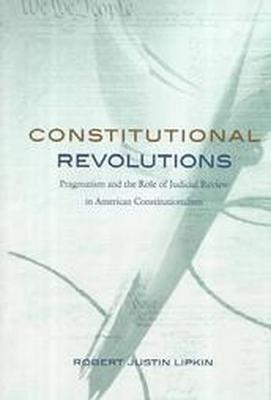
Constitutional Revolutions Pragmatism and the Role of Judicial Review in American Constitutionalism
- List Price: $79.95
- Binding: Hardcover
- Publisher: Duke Univ Pr
- Publish date: 04/01/2000
Drawing on ethical theory, philosophy of science, and constitutional theory, Lipkin provides a progressive, postmodern, and pragmatic theory of constitutional law that justifies the critical role played by the judiciary in American democracy. Judicial review, he claims, operates as a mechanism to allow "second thought" or principled reflection, on the values of the wider culture. Without this revolutionary function, American democracy would be left without an institutional means to formulate the community's considered judgments about good government and individual rights. Although judicial review is not the only forum for protecting this dimension of constitutional democracy, Lipkin maintains that we would be wise not to abandon judicial review unless a viable alternative emerges.
Judges, lawyers, law professors, and constitutional scholars will find this book to be a valuable resource.