
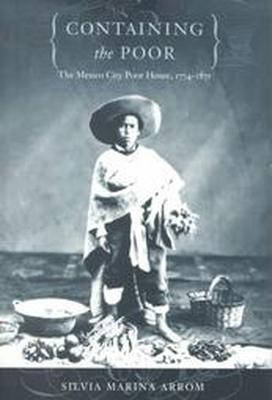
Containing the Poor the Mexico City Poor House, 1774-1871
- Binding: Paperback
- Publisher: Duke Univ Pr
- Publish date: 02/01/2001
For a nation that had traditionally regarded the needy as having the undisputed right to receive alms and whose affluent citizens felt duty-bound to dispense them, the experiment was doomed from the start, explains Arrom. She uses deep archival research to reveal that -- much to policymakers' dismay -- the Poor House became an orphanage largely because the government had underestimated the embeddedness of this moral economy of begging. While tracing the course of an eventful century that also saw colonialism give way to republicanism in Mexico, Arrom links the Poor House's transformation with other societal factors as well, such as Mexican women's increasing impact on social welfare policies.
With poverty, begging, and homelessness still rampant in much of Latin America today, this study of changing approaches to social welfare will be particularly valuable to student and scholars of Mexican and Latin American society and history, as well as those engaged in the study of social and welfare policy.
| Seller | Condition | Comments | Price |
|
Midtown Scholar Bookstore
|
Very Good |
$3.37
|
|
Books From California
|
Very Good |
$7.21
|
|
Books From California
|
Good |
$7.21
|
|
Murphy-Brookfield Books
|
Like New

|
$16.87
|
|
ErgodeBooks
|
Good |
$17.58
|
|
paragonbooks
|
New |
$21.90
|
|
Bonita
|
Good
|
$34.95
|
|
EKER Books
|
New
|
$35.72
|