
Error title
Some error text about your books and stuff.
Close

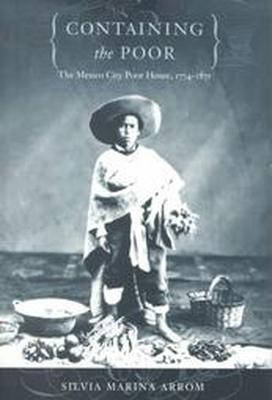
Containing the Poor the Mexico City Poor House, 1774-1871

by Silvia Marina Arrom

  • ISBN: 9780822325611
  • ISBN10: 0822325616

Containing the Poor the Mexico City Poor House, 1774-1871

by Silvia Marina Arrom

  • Binding: Paperback
  • Publisher: Duke Univ Pr
  • Publish date: 02/01/2001
  • ISBN: 9780822325611
  • ISBN10: 0822325616
new Add to Cart $50.56
FREE shipping on orders over $79!
ebook Buy $39.95
License: lifetime
License Details
You are purchasing a license to access this digital product—not ownership of the content.
Access durations vary by product.
eBooks labeled "Lifetime" provide permanent online access along with the option to permanently download the content to a supported device.
Publishers may set shorter access periods and license durations for course materials accessed and hosted through their websites. Please confirm license duration and support directly with these publishers.
American Academy Holdings, Editora Manole, and Forum for International Trade Training have requested that we support "Lifetime" licenses with different durations. Please confirm license duration and support directly with these publishers.
All licenses are non-transferrable and may be revoked if VitalSource or its partners no longer hold rights to the content.
Learn more about our digital license terms on this support page.
Description: In 1774 Mexico City leaders created the Mexico City Poor House -- the centerpiece of a bold experiment intended to eliminate poverty and impose a new work ethic on former beggars by establishing a forcible internment policy for some and putting others to work. In Containing the Poor Silvia Marina Arrom tells the saga of this ill-fated plan, showing how the asylum functioned primarily to educate white orphans instead of suppressing mendicancy and exerting control over the multiracial community for whom it was designed.

For a nation that had traditionally regarded the needy as having the undisputed right to receive alms and whose affluent citizens felt duty-bound to dispense them, the experiment was doomed from the start, explains Arrom. She uses deep archival research to reveal that -- much to policymakers' dismay -- the Poor House became an orphanage largely because the government had underestimated the embeddedness of this moral economy of begging. While tracing the course of an eventful century that also saw colonialism give way to republicanism in Mexico, Arrom links the Poor House's transformation with other societal factors as well, such as Mexican women's increasing impact on social welfare policies.

With poverty, begging, and homelessness still rampant in much of Latin America today, this study of changing approaches to social welfare will be particularly valuable to student and scholars of Mexican and Latin American society and history, as well as those engaged in the study of social and welfare policy.

Expand description
please wait
Please Wait

Notify Me When Available

Enter your email address below,
and we'll contact you when your school adds course materials for
.
Enter your email address below, and we'll contact you when is back in stock (ISBN: ).