
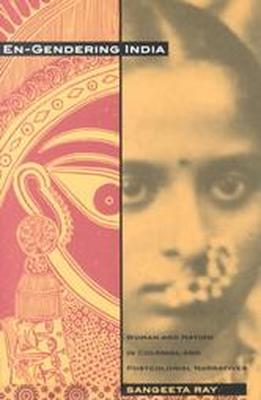
En-Gendering India Woman and Nation in Colonial and Postcolonial Narratives
- Binding: Paperback
- Publisher: Duke Univ Pr
- Publish date: 08/01/2000
Through her readings of works by writers including Bankimchandra Chatterjee, Rabindranath Tagore, Harriet Martineau, Flora Annie Steel, Anita Desai, and Bapsi Sidhaa, Ray demonstrates that Indian women were presented as upper class and Hindu, an idealization that paradoxically served the needs of both colonial and nationalist discourses. The Indian nation's goal of self-rule was expected to enable women's full participation in private and public life. On the other hand, British colonial officials rendered themselves the protectors of passive Indian women against their "savage" male countrymen. Ray shows how the native woman thus became a symbol for both an incipient Indian nation and a fading British Empire. In addition, she reveals how the figure of the upper-class Hindu woman created divisions with the nationalist movement itself by underscoring caste, communal, and religious differences within the newly emerging state. As such, Ray's study has important implications for discussions about nationalism, particularly those that address the concepts of identity and nationalism.
Building on recent scholarship in feminism and postcolonial studies, En-Gendering India will be of interest to scholars in those fields as well as tospecialists in nationalism and nation-building and in Victorian, colonial, and post-colonial literature and culture.
| Seller | Condition | Comments | Price |
|
ErgodeBooks
|
Good |
$30.06
|
|
discount_scientific_books
|
New |
$32.00
|
|
Alibris
|
New

|
$32.71
|
|
discount_scientific_books
|
New |
$33.43
|
|
Bonita
|
Good
|
$38.68
|