
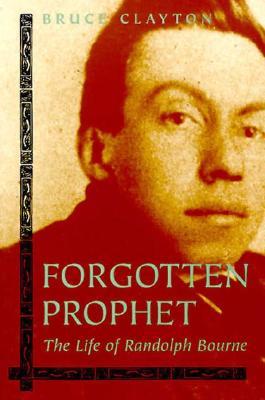
Forgotten Prophet the Life of Randolph Bourne
- List Price: $38.00
- Binding: Paperback
- Publisher: Univ of Missouri Pr
- Publish date: 03/01/1998
Disfigured and hunchbacked, Bourne reacted to his disability not with bitterness or self-pity, but rather with an exuberant love for beauty and a compassion for humanity. He longed for a "trans-national America" strengthened by ethnic diversity and political pluralism.
Nearly alone among American intellectuals, Bourne actively denounced involvement in World War I. He foresaw that the war would bring in its wake the spiritual impoverishment of the nation and the disillusionment of its youth. Although derided and largely ignored at the time they were written, Bourne's fearful predictions would all too quickly be confirmed in the dissolute frenzy of the jazz age, the turmoil of the 1930s, and the social chaos that brought about the rise of fascism in Europe and, soon, an even more destructive war.
Bourne did not live to witness this terrifying unfolding of events. His career as a social critic was brief but prolific. When he died in 1918 at the age of thirty-two, a victim of the flu epidemic, he had completed three books and more than a hundred essays. From his earliest years as a writer, Bourne was identified as a voice for youth, idealism, and progress in human relations. Forgotten Prophet characterizes Bourne not just as a foreseer of this century's bloodshed but, equally important,as an apostle of hope -- a champion of what was best, most truthful in the arts, in politics, and in the conduct of our daily lives.