
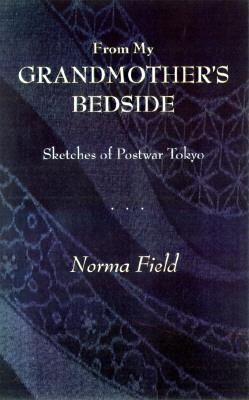
From My Grandmother's Bedside Sketches of Postwar Tokyo
- List Price: $29.95
- Binding: Hardcover
- Publisher: Univ of California Pr
- Publish date: 11/01/1997
Having spent her childhood in Japan and her adulthood in the United States, Field speaks from the position of one who straddles two worlds. Her testimony is highly personal, her voice is intimate, her observations are keen and clear. She juxtaposes details from daily life -- conversations overheard on the subway; arguments between her mother and aunts; the struggle to feed, bathe, and care for her grandmother -- with observations on the political and social changes that have transformed Japan. She shows how the belated coming to terms with the war and continuing avoidance of the same are intimately related to the look and feel of Japanese society today. She gently folds back the complicated layers of blame and responsibility for the war, touching in the process on subjects as diverse as the effects of the atomic bomb, comfort women, biracial/bicultural families, the farewells of Kamikaze pilots, and the dehumanizing effects of Japan's postwar economic boom. A recurrent theme is the observation of thefiftieth anniversary of the end of the war.
From My Grandmother's Bedside is also a contemplation of the many facets of language: the kinds of language with which her grandmother's illness has been negotiated, the wordless language her grandmother speaks, her own relationship to these languages. Through it all runs the realization that the personal and the political are perpetually entangled, that past and present converge and overlap.