
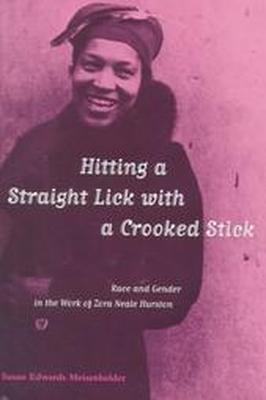
Hitting a Straight Lick With a Crooked Stick: Race and Gender in the Work of Zora Neale Hurston
- List Price: $34.95
- Binding: Hardcover
- Edition: 2
- Publisher: University of Alabama Press
- Publish date: 06/01/1999
Although Hurston openly criticized white culture in letters, in articles for black publications, and in the manuscript version of her autobiography, her attack is more indirect in her work published by white publishers and in white periodicals. Meisenhelder convincingly demonstrates that Hurston, drawing a lesson from African American folk tales dealing with black survival in a white world, plays the role of artful trickster in such publications. In the tales of Daddy Mention, High John de Conquer, and other figures that she recorded and commented on in her anthropological works, Hurston found models of black people self-consciously donning a mask of subservience, even living up to racist stereotypes, to make fun of and win something from whites. Seeing Hurston as such a trickster figure in her writing invites substantial reinterpretation of many of her works.