
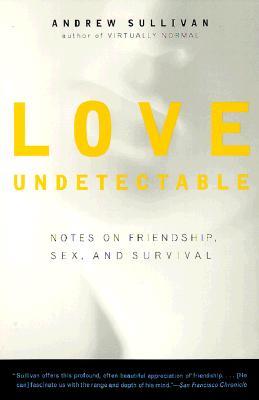
Love Undetectable Notes on Friendship, Sex, and Survival
- Binding: Paperback
- Publisher: Random House Inc
- Publish date: 11/01/1999
Standing amid beautiful gay men at the annual all-night Black Party, Sullivan laments his failed search for intimacy. A practicing Catholic, Sullivan reflects on his faith in God, and expresses his bittersweet joy upon learning about new AIDS treatments that he believes led to the virus's recent transformation from a plague into a chronic illness. He revisits Freud to seek the origins of homosexuality, and reviews the works of Aristotle, St. Augustine, and W.H. Auden to define friendship for a contemporary, post-plague world. Sullivan's last essay extols the virtues of friendship, elevating platonic love over the romantic, as he memorializes his best friend who died of AIDS. Intensely personal and passionately political, Sullivan's essays are not just about his own experiences but also a powerful testament to human resilience, faith, hope and love.