
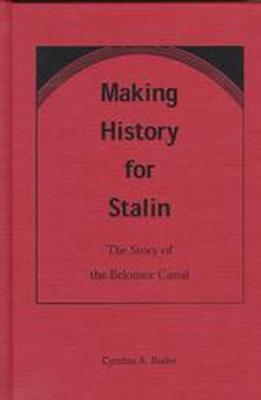
Making History for Stalin the Story of the Belomor Canal
- Binding: Hardcover
- Publisher: Univ Pr of Florida
- Publish date: 04/01/1998
Built with forced labor, the Belomor project has been a forbidden topic for half a century. With access to recently opened archives and to interviews with Canal construction survivors themselves, Ruder examines the project and its attendant literary works -- drama, poetry, novels, and the collectively written History of the Construction of the Stalin White Sea-Baltic Canal -- to create an unusually broad understanding of Stalinist culture. She argues that the project was the first to institutionalize the philosophy of perekovka, the idea that a new people who personify the Soviet Union in action and deed could be created through forced labor and ideological reeducation.
As both a construction project and a literary event, Belomor was characterized by coritradictions: enthusiasm versus revulsion, good will versus cynicism, self-destruction versus self-preservation, and scorn for the West versus a desperate hunger to impress it. Ruder shows that these juxtapositions capture the tension that infused many other events at the time, turning Belomor into a microcosm of life and literature in Soviet Russia.
| Seller | Condition | Comments | Price |
|
elizabeth baxley
|
Good

|
$33.75
|
|
Glover's Bookery, ABAA
|
Very Good |
$55.15
|
|
Glover's Bookery, ABAA
|
New |
$75.40
|
|
ErgodeBooks
|
Good |
$81.53
|
|
ErgodeBooks
|
New |
$123.10
|
|
Bonita
|
Good
|
$125.91
|
|
Just one more Chapter
|
New |
$160.71
|