
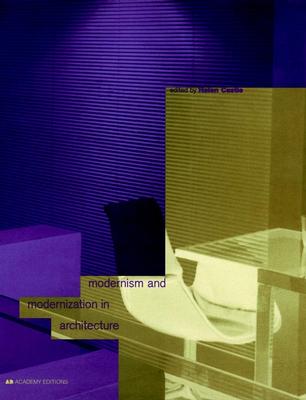
Modernism and Modernization in Architecture
- List Price: $80.00
- Binding: Paperback
- Publisher: John Wiley & Sons
- Publish date: 01/01/2002
In the mid to late 1990s, architecture has emerged as part of a new cultural movement. Innovative and progressive in attitude, the new modernism or shift towards modernisation is ubiquitous throughout every aspect of cultural life, from furniture design to politics. Just as 'the modern' is a feature of many a magazine's leader line, 'modernisation' has become a common sound bite for politicians, tripped off the tongue, most significantly by Tony Blair and echoed imitatively by William Hague. As Ilse Crawford, editor of Elle Decoration, writes, 'The government has changed, a class-conscious aesthetic is no longer appropriate, modern equals optimism and looking forward, but above all the dominant culture now is urban and young (in spirit at least).' (Space, The Guardian, Friday 19 September 1997)
This book charts the history of modernism and its incredible reappearance as a force and influence which cuts across disciplines to affect the international design world and built environment. An essay on Japanese modernism by Tom Henegan is followed by projects by Tadao Ando, Shigeru Ban and Noriyuki Tajima. American modernism is introduced by Jayne Merkel and followed by projects on the works of Steven Holl and Antoine Predock. Other international modernist architects represented in this book include: Wendell Burnette, Erick yon Egeraat, Seth Stein, Studio Granda and Carl Viggo Holmebakk