Due to planned maintenance, your school has disabled school system log-ins at this time.
You may continue shopping as a guest, or by creating a bookstore-only account.
Please complete the purchase of any items in your cart before going to this third-party site.
Also note that if you qualify for financial aid, items purchased through this site will not be subject to
reimbursement.
You are purchasing a license to access this digital product—not ownership of the content.
Access durations vary by product.
eBooks labeled "Lifetime" provide permanent online access along with the option to permanently download the content to a supported device.
Publishers may set shorter access periods and license durations for course materials accessed and hosted through their websites. Please confirm license duration and support directly with these publishers.
American Academy Holdings, Editora Manole, and Forum for International Trade Training have requested that we support "Lifetime" licenses with different durations. Please confirm license duration and support directly with these publishers.
All licenses are non-transferrable and may be revoked if VitalSource or its partners no longer hold rights to the content.
Learn more about our digital license terms on this support page.
Description:
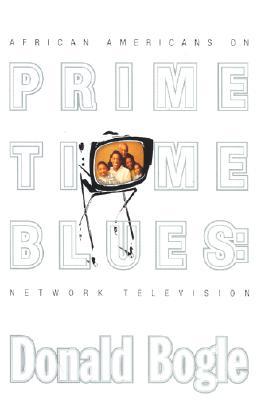
Primetime Blues is the first comprehensive history of African Americans on network television. Donald Bogle not only examines the stereotypes that too often continue to march across the screen today but also shows the ways in which television has been invigorated by extraordinary black performers, whose presence on the screen has been of great significance to the African American community. This important book presents a history rich in achievement and paradox -- a history that tells us as much about attitudes toward race and sex as it does about the way in which this country feels most comfortable viewing its African American citizens.
Bogle's exhaustive study moves from the postwar era of Beulah and Amos 'n' Andy to the politically restless sixties reflected in I Spy and an edgy, ultra-hip program like The Mod Squad. He examines the television of the seventies, when a nation still caught up in Vietnam and Watergate retreated into the ethnic humor of Sanford and Son and Good Times, and the politically conservative eighties marked by the unexpected success of The Cosby Show and the emergence of deracialized characters on such dramatic series as L.A. Law. Finally, he turns a critical eye to the television landscape of the nineties, with shows such as The Fresh Prince of Bel Air, I'll Fly Away, ER, and The Steve Harvey Show.
Expand description
Product notice
Returnable at the third party seller's discretion and may come without consumable supplements like access codes, CD's, or workbooks.