
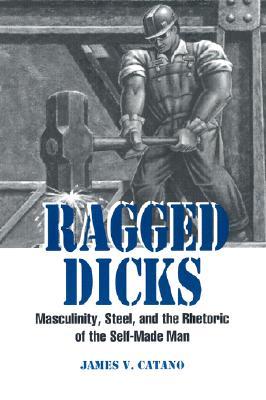
Ragged Dicks Masculinity, Steel, and the Rhetoric of the Self-Made Man
- List Price: $39.00
- Binding: Paperback
- Edition: 3
- Publisher: Southern Illinois Univ Pr
- Publish date: 10/01/2001
To explain those practices and their effectiveness, Catano argues that the basic narrative achieves much of its effectiveness by engaging and enacting the traditional psychological dynamics of the family romance: preoedipal separation, oedipal conflict, and "proper" postoedipal self-definition and socialization.
To focus on the combined social, psychological, and rhetorical dynamics that constitute the ongoing activity he calls masculine self-making, Catano emphasizes a particular strand: masculinity and steelmaking. Pursuing that strand, he argues that these representations of masculine self-making are rhetorical enactments of cultural needs and desires, and that they are ongoing and formative arguments about what society and its individuals either are or should be.