
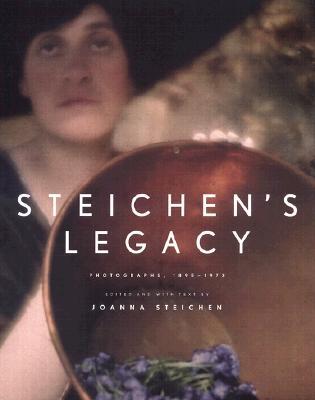
Steichen's Legacy
- List Price: $100.00
- Binding: Hardcover
- Publisher: Alfred A. Knopf
- Publish date: 09/01/2000
Description:
August Rodin called Edward Steichen "a very great artist, and the greatest photographer of his time". This is the most comprehensive and most beautifully printed gathering of the work of this master. Here are his photographs of: Colette... Richard Strauss... Anatole France... Amelia Earhart (the softness of the pose suggests a shyness but the determination is revealed in the strong straight arm braced against a square shoulder)... August Rodin, with whom Steichen studied for a year... Noel Coward... Frank Lloyd Wright... Isadora Duncan, caught at the precise moment when the wind and light turned her gown into a shimmer of flame... La Duchesse de Gramont... Eugene O'Neill... Theodore Roosevelt... Maurice Maeterlinck... George Bernard Shaw, whom Steichen called "the photographer's best model", Bernard Baruch, shown half in light, half in shadow, a man with deep secrets wearing a benign sly smile... Joan Crawford... George Gershwin... F. D. R. when he was governor of New York, a standard pose, the decisive leader in his chair -- and later when he was president Steichen cropped the same picture to show the sad, serious face of a visionary acquainted with suffering... And here too are landscapes, sunflowers, roses, photographs taken during the two wars, fashion and advertising photographs, friends and family. In Joanna Steichen's personal and illuminating text she writes about Steichen's passionate views on photography, about how he moved away from painting (his understanding and support of modernism helped to bring it to this country); about his experimentation with abstraction; the repercussions of commercial success in his life as an artist; about how he and Joanna first met (through themischievous intervention of Steichen's brother-in-law, Carl Sandberg) and how their relationship changed as they became lovers, man and wife, then finally artist and assistant. She writes about his days as a colonel in WWI, in charge of aerial photography for the Air Force in France, and then in WWII, past the age of retirement -- a capta in in the Navy -- in charge of combat photography in the Pacific; his work for Vogue, Vanity Fair and Life magazine. She writes about his years as the European art scout for his friend Alfred Steiglitz, later designing the galleries for the Photo Secession and "291" and arranging the work of Matisse, Cezanne, Picasso and Brancusi long before these names were known in America. And she writes about their farm in Connecticut that Steichen landscaped out of woods and rocks and hollows and photographed again and again over the years as well as the new race of delphinium Steichen bred and the sunflowers he raised and studied through his lens. Carl Sandberg said of Steichen's work: "A scientist and a speculative philosopher stands back of Steichen's best picture. They will not yield their meaning and essence on the first look nor the thousandth -- which is the test of masterpieces". Edward "Steichen Legacy" is a book of masterpieces.
Expand description

Please Wait