
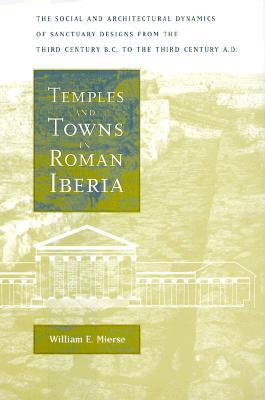
Temples and Towns in Roman Iberia the Social and Architectural Dynamics of Sanctuary Designs from the Third Century B.C. to the Third Century A.D
- Binding: Hardcover
- Publisher: Univ of California Pr
- Publish date: 09/01/1999
By examining the changing forms of temples and their placement within the urban fabric, Mierse shows that Iberian architecture had great variation. It was never a slavish imitation of an imported model but always a novel experiment. Sometimes the forms arrived at were both new and unexpected; sometimes the specific prototypes were obvious. But the Iberian form was significantly altered to suit local needs. What might seem at first to be a repetition of forms turns out to be theme and variation upon closer investigation. Mierse brings impressive learning to his quest, which allows him a unique perspective on the interaction between the events and architecture he chronicles here.
The architectural changes are interesting in themselves, but also of note are the reasons underlying the modifications. We see the growing role of private patronage and the increasing importance of local wealth in determining choices of form over the six centuries. We also see how the architecture responds to Iberians' increasing sense of Romanness, which by the third century has takencomplete hold of most of the peninsula. The power of outside forces on local forms, the influence of local elites who paid for the structures, and the innovations of architects and builders produced distinctive designs.
| Seller | Condition | Comments | Price |
|
Magers and Quinn Booksellers
|
Very Good

|
$27.63
|
|
Collins Books
|
Like New
|
$28.12
|
|
BookHolders
|
Very Good |
$28.33
|
|
Munster & Company
|
Very Good
|
$33.75
|
|
Ergodebooks
|
Good |
$36.57
|