
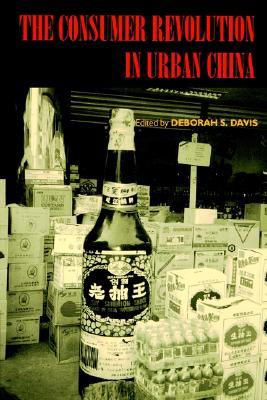
The Consumer Revolution in Urban China
- Binding: Paperback
- Publisher: Univ of California Pr on Demand
- Publish date: 12/01/1999
In the early 1980s Beijing's communist leadership advocated decollectivization, foreign trade, and private entrepreneurship to jump-start a stagnant economy. It explicitly rejected any notion that economic reforms would lead to political change, but by the early 1990s its program had not only produced double-digit growth but also enabled ordinary citizens to nurture dreams and social networks that challenged official monopolies of power. Using participant observation, the authors in this book describe and analyze a wide range of these changing consumer practices, including luxury housing, white wedding gowns, greeting cards, McDonald's, discos, premium cigarettes, and bowling.
Capitalism has brought urban Chinese both a higher material standard of living and new freedoms to create a private life beyond the control of the state. This important book offers rare insights into the world's largest marketplace.