
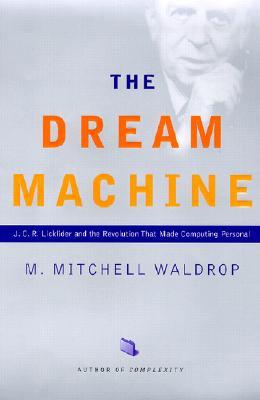
The Dream Machine: J.C.R. Licklider and the Revolution That Made Computing Personal
- List Price: $29.95
- Binding: Hardcover
- Publisher: Penguin Putnam
- Publish date: 01/01/2001
"The Dream Machine" is not only the first full account of Licklider's remarkable life, but an enthralling saga of one of the great intellectual and technological adventures of human history. Spanning nearly 50 years, from the Second World War to the personal computer boom of the 1980s, to the incredible success of the Internet, the book charts the development of the "human-computer symbiosis" that Licklider (in his powerful position as director of the Department of Defense's civilian research arm, the Advanced Research Projects Agency, or ARPA) and a group of brilliant scientists, engineers, and designers brought about. Waldrop opens with a look at the technological ferment of the 1940s and '50s, when figures like Norbert Wiener, Vannevar Bush, and and John von Neuman, and ideas likeCybernetics, information theory and cognitive psychology were changing not only the way humans looked at machines but at themselves as well. From there the book moves to the history of Licklider's career at ARPA, where, in two short years (1962-1964), he set in motion forces that would give rise to essentially all of modern computing. The final part of "The Dream Machine" examines the long-term results of Lick's vision - Xerox's famous PARC research lab, the origin of the Macintosh and Windows interface, the mouse, and laser printers; the internel; and the World Wide Web. Author of the critically acclaimed Complexity, Waldrop is the rare science writer who can both convey the human passions that underlie technology and bring clarity to the most complex ideas. "The Dream Machine" is a book that stands to become a classic in the field.