
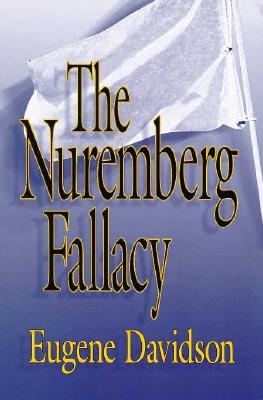
The Nuremberg Fallacy
- Binding: Paperback
- Publisher: Univ of Missouri Pr
- Publish date: 10/01/1998
In this volume, Eugene Davidson continues the investigations begun in The Trial of the Germans, which studied the consequences of the Nuremberg trials, by focusing on five major conflicts since the end of World War II: the Suez crisis of 1956; Algeria's war of independence; Israel's recurring (and ongoing) battles with its Arab neighbors, complicated and worsened by intervention of the superpowers; the wars in Indochina; and the Soviet Union's suppression of Czechoslovakia and other border states of Eastern Europe.
Exploring the roots and ramifications of these five conflicts, Davidson is able to chart the crosscurrents between large and small states, between individual nations and the United Nations, between the rules of Nuremberg and the significantly older rules of self-interest. The result is a thoughtful and thought-provoking study of the dynamics of war and peace in the post-Nuremberg world.
The rules of war established at Nuremberg -- observing the flag of truce, prohibiting attacks on surrendered enemies, treating prisoners of war and civilianpopulations humanely -- have become virtually irrelevant in modern guerrilla warfare. If anything, Davidson suggests, conditions have actually become worse than they were before the Nuremberg War Crimes Tribunal.
The continuing importance and relevance of The Nuremberg Fallacy is best summarized in the final sentences of Davidson's text: "The survival of a nation cannot be successfully entrusted to simplistic formulae or to principles that reflect unworkable doctrines. No computers have been programmed for the wisdom that remains essential for survival. People still have to provide that from their own inner and outer resources, no matter how far the weapons may seem to have outdistanced them.