
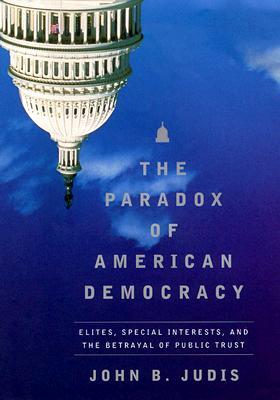
The Paradox of American Democracy: Elites, Special Interests, and the Betrayal of the Public Trust
- List Price: $26.00
- Binding: Hardcover
- Publisher: Pantheon Books
- Publish date: 01/01/2000
The symptoms of our political disenchantment are all too familiar: decreasing voter turn out, political parties that have been co-opted by consultants and large contributors, an old-fashioned concern for national welfare eviscerated by lobbying organizations and special interest groups.
In The Paradox of American Democracy, John Judis explores how and why a once robust system of government now struggles to remain vital. Judis revisits the glory days of democracy -- during the Progressive Era, the New Deal, and the 1960's -- and from them discerns the conditions and circumstances that insured its efficacy. Democracy, Judis argues, has flourished when citizens directly affected what government did, when no single group -- consumer, labor, or business -- wielded disproportional or eclipsing influence. It is not a balancing act of opposing interests that has made democracy effective, but an active articulation of what constituted the national interest -- most often by an institution or arbitrating group of an elite nature whose actions were governed by a disinterested pursuit of the common good. The great paradox at the heart of American democracy lies in the instrumental role played by an elite -- in the form of trade commissions, labor relation boards, even political establishments that fairly adjudicated the claims of the pluralistic forces that constitute a working democracy. And it is in thedisappearance of such elites, and the abandonment of the national interest to which Judis traces the cynicism and hopelessness that characterize voters' perspectives on our country's political system.