
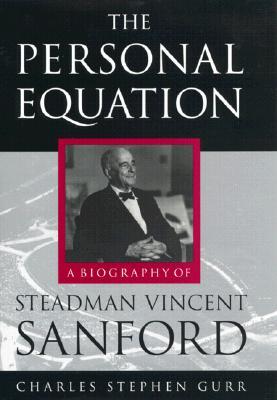
The Personal Equation: a Biography of Steadman Vincent Sanford
- Binding: Hardcover
- Publisher: University of Georgia Press
- Publish date: 03/01/1999
The story begins in the late nineteenth century by describing Sanford's family and childhood, his education, and his early teaching and administrative career in the public schools. In 1903 Sanford joined the faculty of the University of Georgia, where he subsequently founded the Henry W. Grady School of Journalism and served as its dean. Sanford was a major contributor to the athletic program at the University and is possibly best remembered for the athletic stadium that bears his name. He rose through the university's administrative ranks, serving as president of the University of Georgia from 1932 to 1935 and then as chancellor of the University System of Georgia, a position he held until his death in 1945.
While focusing on Sanford's accomplishments as a teacher, leader, and administrator, Charles Stephen Gurr also draws the portrait of a man for whom the ties of family, friendship, and community were immensely important and whose personal and professional legacy lives on in the lives he influenced and the institutions he led.