
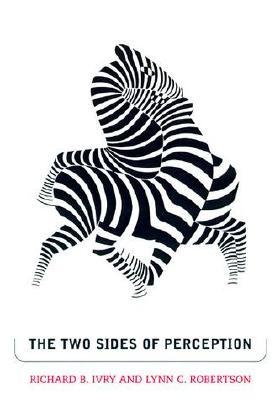
The Two Sides of Perception
- Binding: Hardcover
- Publisher: Mit Pr
- Publish date: 10/01/1997
After an historical introduction, the authors offer a cognitive neuroscience perspective on hemispheric specialization in perception. They propose that the two hemispheres differ in how they filter task-relevant sensory information. Building on the idea that the hemispheres construct asymmetric representations, the hypothesis provides a novel account of many laterality effects. A notable feature of the authors' work is their attempt to incorporate hemispheric specialization in vision, audition, music, and language within a common framework. In support of their theory, they review studies involving both healthy and neurologically impaired individuals. They also provide series of simulations to demonstrate the underlying computational principles of their theory. Their work thus describes both the cognitive and neurological architecture of hemispheric asymmetries in perception.
| Seller | Condition | Comments | Price |
|
3rd St. Books
|
Very Good |
$12.37
|
|
HPB-Emerald
|
Very Good

|
$25.58
|
|
Bingo Used Books
|
Like New
|
$50.62
|
|
Poverty Hill Books
|
New
|
$73.07
|
|
Just one more Chapter
|
New |
$76.67
|
|
GridFreed
|
New |
$140.57
|